Mastering Modern Web Experiments: HTML in Canvas, Hex Maps, E-ink Tweaks, and CSS Image Sorcery
Introduction
In the fast-paced world of web development, staying ahead means exploring bleeding-edge techniques. This guide transforms insights from What's !important #10 into a practical how-to. You'll learn to render real HTML inside a canvas, build hexagonal data visualizations, optimize for e-ink displays, and even swap image sources with pure CSS. Each technique is explained step-by-step, with prerequisites and tips to help you get started. Whether you're a seasoned developer or a curious learner, these experiments will expand your toolkit.
What You Need
- A modern web browser: Chrome 146+ (for HTML-in-Canvas flag; other features work in most browsers)
- Code editor (VS Code, Sublime, or similar)
- Basic knowledge of HTML, CSS, and JavaScript
- For hex map: familiarity with SVG and data visualization
- Optional: An e-ink device (Kindle, Kobo, Boox) or an e-ink emulator
- Patience for experimentation – some APIs are experimental
Step-by-Step Guide
Step 1: Render HTML Inside a Canvas with the HTML-in-Canvas API
This new API allows you to embed semantic HTML into a <canvas> element, applying visual effects. To try it:
- Enable the flag: Open Chrome and navigate to
chrome://flags/#canvas-draw-element. Enable the “Canvas Draw Element” feature and relaunch. - Create a canvas: In your HTML, add a
<canvas id="myCanvas"></canvas>element. - Draw HTML: Use JavaScript to get the canvas context and call
context.drawElement(htmlElement). For example:const canvas = document.getElementById('myCanvas'); const ctx = canvas.getContext('2d'); const div = document.createElement('div'); div.textContent = 'Hello, Canvas!'; ctx.drawElement(div); - Apply effects: Since the HTML is rendered to a canvas, you can apply filters, transformations, or blend modes via the canvas API.
- Explore demos: Check Amit Sheen’s HiC Showroom for inspiration (requires the flag).
Step 2: Build a Hexagonal World Map Analytics Feature
Inspired by Ben Schwarz’s retrospective, you can create your own hex-grid map using SVG and CSS. Here’s how:
- Design a hex grid: Use a library like hex-grid or generate hex coordinates manually. Each hexagon is an SVG
<polygon>. - Project geographic data: Convert country centroids or region points to hex grid indices. Tools like D3.js can help with projections.
- Color-code by metric: For analytics, assign a color or intensity to each hexagon based on data (e.g., page views, sales). Use CSS classes or inline styles.
- Add interactivity: Implement hover effects (e.g., tooltip with data) using JavaScript event listeners on each polygon.
- Optimize performance: Use SVG sprites or a single SVG element to reduce DOM size. Consider using
requestAnimationFramefor smooth transitions.
Step 3: Optimize a Web App for E-ink Devices
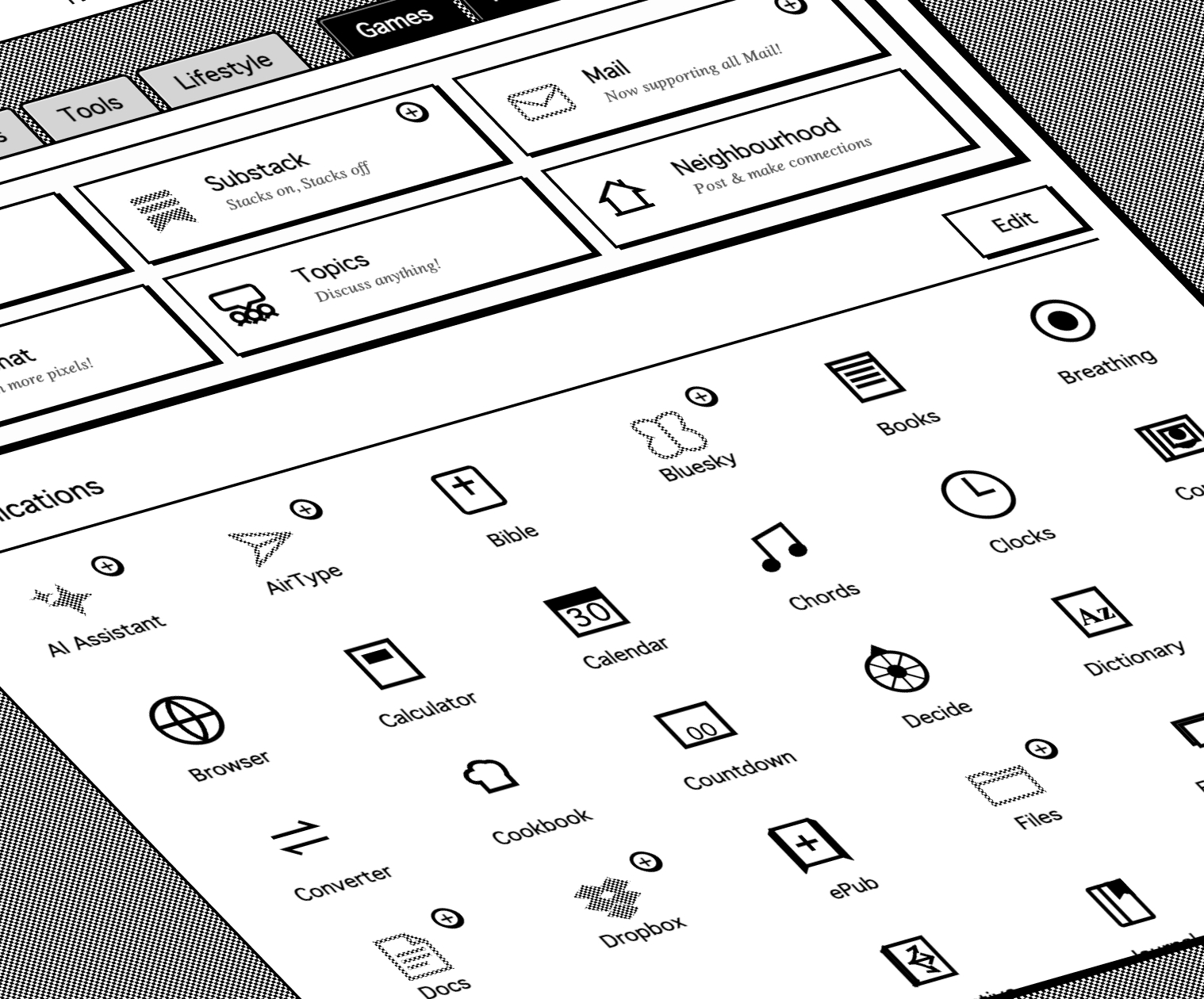
E-ink displays are slow to refresh and have limited color. To create an e-ink-friendly experience like Rekindle:
- Use monochrome CSS: Apply
color: black; background: white;and avoid gradients. Use@media (monochrome)to detect monochrome screens. - Disable animations: Set
* { animation: none !important; transition: none !important; }within a media query for e-ink devices. - Limit pointer precision: E-ink devices often have coarse touch. Use larger touch targets (at least 48px) and avoid hover-only interactions. Query
@media (pointer: coarse). - Reduce update frequency: Use
@media (update: slow)to minimize repaints. Consider debouncing input events. - Test with Rekindle: Visit Rekindle's website to see how a full e-ink OS works. You can experiment by building your own simplified version with these techniques.
Step 4: Swap Image Sources Using CSS content
Jon’s discovery shows you can replace an <img> src with CSS alone. Here's how:

- Start with an image:
<img src="original.png" alt="Original description"> - Apply CSS rule:
img { content: url(new-image.png) / "New alt text"; }The/separates the image from the alternative text. - Use
image-set()for responsive images:img { content: image-set(url(low-res.jpg) 1x, url(high-res.jpg) 2x); } - Test across browsers: This works in all current browsers (Chrome, Firefox, Safari, Edge). It's been Baseline for 11 years.
- Apply conditionally: Combine with media queries:
@media (min-width: 600px) { img { content: url(desktop.jpg); } }
Tips and Considerations
- Experimental features: HTML-in-Canvas is behind a flag; don't rely on it in production yet. Check browser support regularly.
- Accessibility: When swapping
imgsrcs via CSS, ensure the alt text is updated as shown. Screen readers use the alt attribute from HTML, not CSS – but the/syntax incontentis intended for future support. - Performance: Hex maps with many polygons can be heavy; consider using WebGL or a canvas fallback for large datasets.
- E-ink testing: If you don’t have a physical device, use Chrome DevTools’ device emulation with a custom e-ink profile (monochrome, slow update).
- Stay updated: Media Queries Level 5 for e-ink is still evolving. Watch for new specs and browser implementations.
- Community inspiration: Explore the demos from Amit Sheen and the Rekindle project for deeper insights. Many techniques are community-driven and open-source.
Now you have a solid foundation to experiment with these modern web capabilities. Happy coding!
Related Articles
- Breaking: Bolt Partners with Dongfeng to Bring Chinese EVs to South Africa
- Chrome 136 Ships 'Explicit Compile Hints' to Slash JavaScript Startup Bottlenecks
- 10 Ways to Supercharge V8 Startup with Explicit Compile Hints
- Decoding Reality: A Step-by-Step Guide to the Boltzmann Brain Paradox
- 7 Ways Explicit Compile Hints Supercharge V8 JavaScript Startup
- Breaking: Developers Battle 100+ WebSocket Events Per Second – Here’s How to Stop UI Lag
- 10 Things You Need to Know About the End of Ask.com
- Speed Up Page Loads with V8's Explicit Compile Hints: A Practical Guide