7 Surprising Facts About the New Fuel-Saving Lunar Route Discovered by Scientists
An international team of researchers has unveiled a revolutionary, energy-efficient pathway to the Moon using cutting-edge computer simulations. This hidden route promises to slash fuel consumption and open new possibilities for lunar exploration. Here are the most important things you need to know about this breakthrough.
1. The Route Leverages Weak Stability Boundaries
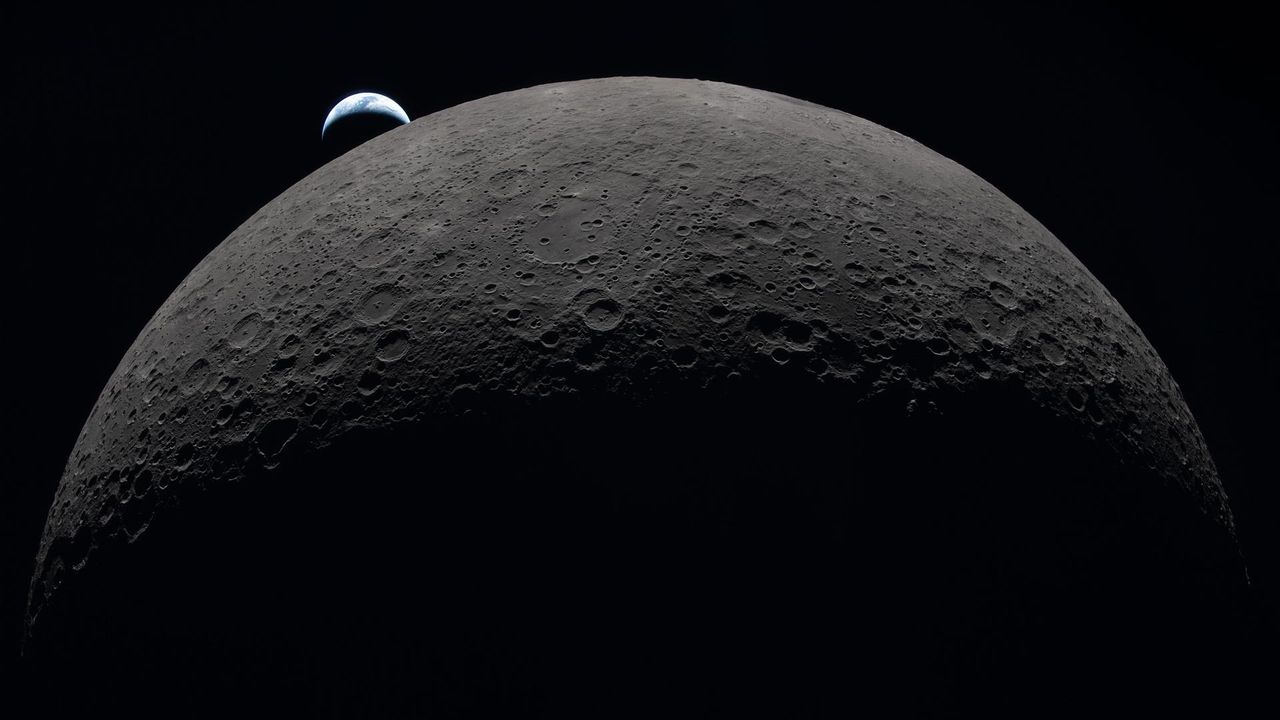
The newly discovered path exploits so-called weak stability boundaries (WSBs) in Earth-Moon space. These are regions where gravitational forces from both bodies balance almost perfectly, allowing a spacecraft to travel with minimal propellant. Unlike traditional Hohmann transfers that require precise burns and high energy, the WSB route uses the natural gravitational dynamics to ballistically capture into lunar orbit. Researchers modeled vast numbers of trajectories to find the most efficient solution, confirming that this hidden highway can cut fuel needs by up to 25%.
2. It Was Hidden in Plain Sight for Decades
The concept of low-energy transfers isn't entirely new—mathematicians like Edward Belbruno explored similar ideas in the 1980s. However, this specific route remained undetected because earlier computers lacked the power to simulate the complex, chaotic interactions over long timeframes. Modern supercomputers and advanced algorithms finally revealed the optimal trajectory, which threads a narrow corridor between gravitational forces. The researchers describe it as a "needle in a haystack" that had been overlooked due to computational limitations.
3. Fuel Savings Translate to Bigger Payloads
Every kilogram of fuel saved on a lunar mission allows for an additional kilogram of science equipment, supplies, or crew. The new route reduces the required propellant mass by approximately 15-25% compared to conventional paths. For example, a typical lunar lander might carry 3 tonnes of fuel; using this route could free up nearly 750 kg. That extra capacity could be used for advanced instruments, more life support consumables, or even additional rovers. This makes missions more cost-effective and opens the door to heavier payloads that were previously unfeasible.
4. The Journey Takes Longer, but the Trade-Off Is Worth It
The fuel-efficient route is not a shortcut in time—in fact, it can take several days longer than a direct transfer. A standard translunar injection gets a spacecraft to the Moon in about 3 days, while the new route may require up to 10 days. Yet for uncrewed cargo missions or supply runs, the slower speed is acceptable because the primary cost driver is fuel, not time. The trade-off allows agencies like NASA or private companies to reduce launch costs significantly. For crewed missions, however, the longer duration may pose radiation and life-support challenges, so the route is best suited for robotic explorers.
5. Advanced Computer Modeling Made the Discovery Possible
The breakthrough came from an international collaboration using high-performance computing to analyze millions of potential trajectories. The team employed a technique called global optimization coupled with gravitational n-body simulations. These models accounted for perturbations from the Sun and other planets, which previous simpler models ignored. By iterating through countless paths, the algorithm stumbled upon an almost imperceptible valley in the energy landscape—a low-energy corridor that had never been mapped in such detail. The researchers plan to release the trajectory data publicly to benefit future missions.
6. The Route Could Enable Low-Cost Lunar Infrastructure
Reducing fuel costs is a game-changer for establishing a permanent human presence on the Moon. With this hidden route, companies could send regular supply shuttles using smaller, cheaper rockets. It could also facilitate the deployment of a lunar communications relay network or a fuel depot in orbit. Moreover, the same principles apply to other celestial bodies—similar low-energy pathways exist for Mars or asteroids. The discovery is a stepping stone toward a more affordable and sustainable space economy, where fuel is no longer the limiting factor.
7. The Next Step: Testing the Route in Real Missions
While simulations are promising, the ultimate proof requires a real spacecraft to fly the path. Several space agencies, including NASA and ESA, have expressed interest in validating the route with small CubeSats or dedicated tech demonstrators. A test mission could launch within the next five years, telemetry would confirm whether actual fuel savings match predictions. If successful, this hidden route would be incorporated into standard mission planning, potentially revolutionizing how we travel to the Moon. The researchers are already working on refining the model to account for real-time orbital perturbations.
In summary, this hidden lunar route is not just a theoretical curiosity—it's a practical, fuel-saving path that could transform space exploration. By exploiting weak stability boundaries and leveraging advanced computing, scientists have unlocked an efficient gateway to the Moon. As we prepare for sustained lunar presence, this discovery offers a cost-effective and scalable solution for delivering payloads. The journey might be slower, but the savings in fuel and increased payload capacity make it an irresistible option for future missions.
Related Articles
- Kuskokwim Ice Breakup Triggers Flood Risk Near Aniak
- The Ancient Mystery of the Twisted-Jaw Creature: Tanyka amnicola
- The Hidden Cost of a Bug-Free Workforce: How AI's Efficiency May Erode Team Bonds
- How to Appreciate the Motorola Nexus 6’s Groundbreaking Design and Legacy
- Breaking the Memory Barrier: New State-Space Model Revolutionizes Long-Term Video AI
- NASA's Ambitious Monthly Moon Landings: Overcoming Hurdles to Achieve a Lunar Cadence
- Unlocking Legacy Apps for AI: Amazon WorkSpaces Adds Agent Desktop Capabilities (Preview)
- How to Analyze Ransomware Trends in Q1 2026: A Step-by-Step Guide