5 Key Updates Meta Is Making to End-to-End Encrypted Backups
Meta continues to lead the charge in securing user data, particularly through its end-to-end encrypted backups for WhatsApp and Messenger. Recent enhancements to the HSM-based Backup Key Vault strengthen the foundation, ensuring that only you—never Meta, cloud providers, or any third party—can access your message history. From passkey integration to over-the-air key distribution, these changes make encryption more accessible and transparent. Below, we break down the five most important updates that are redefining how Meta protects your encrypted backups.
1. The HSM-Based Backup Key Vault: A Tamper-Resistant Foundation
At the heart of Meta's encrypted backups lies the HSM-based Backup Key Vault. This system lets you protect your message history with a recovery code stored in hardware security modules (HSMs). These tamper-resistant devices are spread across multiple data centers globally, creating a geographically distributed fleet. Thanks to majority-consensus replication, even if one data center goes down, your recovery code remains accessible. The key insight? Meta, cloud storage providers, and other third parties have zero access to your recovery code—ensuring true end-to-end encryption. This vault is the bedrock upon which all other backup security features are built, offering both resilience and trust.
2. Passkeys Make Encryption Easier Than Ever
Late last year, Meta simplified the process of enabling end-to-end encrypted backups by introducing passkey authentication. Instead of relying solely on a recovery code or password, users can now use biometric or device-based passkeys—think Face ID or a hardware security key—to protect their backup. This not only enhances security by leveraging modern authentication methods but also reduces friction, encouraging more people to opt-in. Passkeys eliminate the need to remember complex recovery phrases, while still ensuring that your encrypted backup is tied to your identity. Meta continues to evolve this feature, making encryption both powerful and user-friendly.
3. Over-the-Air Fleet Key Distribution for Messenger
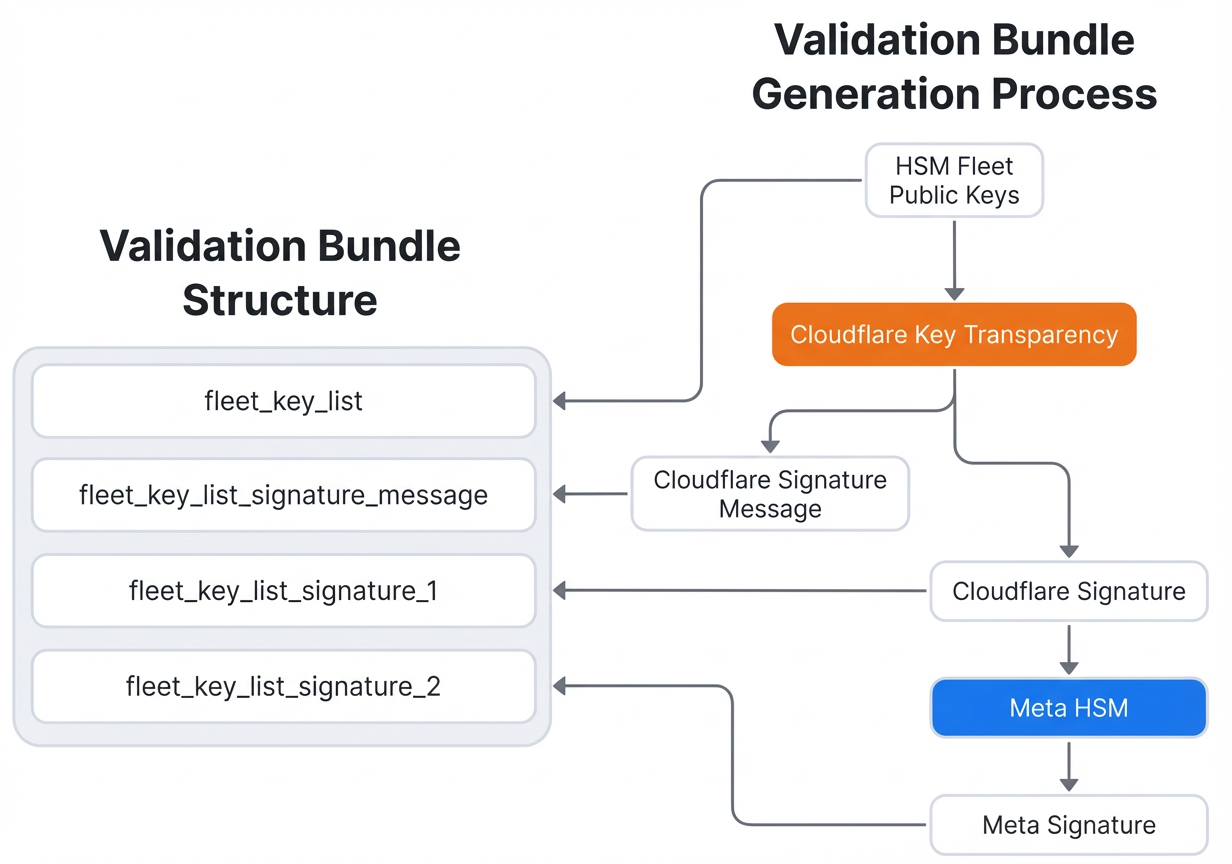
To verify the authenticity of HSM fleets, clients must validate the fleet’s public keys before establishing a session. Previously, WhatsApp hardcoded these keys into the app. But for Messenger, Meta needed a way to deploy new HSM fleets without forcing an app update. Enter over-the-air fleet key distribution: fleet keys are delivered in a validation bundle signed by Cloudflare and countersigned by Meta. This provides independent cryptographic proof of authenticity, and Cloudflare maintains an audit log of every bundle. This system enables seamless, secure updates for Messenger users, ensuring that new fleets are trusted instantly. The full validation protocol is detailed in Meta’s whitepaper, referenced below.
4. Public Evidence of Secure Fleet Deployment
Transparency is critical when proving that Meta cannot access your encrypted backups. Starting now, Meta will publish evidence of the secure deployment of each new HSM fleet on its engineering blog. New deployments are rare—typically every few years—but each one undergoes a rigorous verification process. Any user can follow the steps in the Audit section of the whitepaper to independently confirm that the fleet is deployed correctly. This commitment to transparency cements Meta’s leadership in secure encrypted backups, giving users a direct way to validate the system’s integrity. You no longer have to take Meta’s word for it; the proof is publicly verifiable.
5. The Complete Technical Specification in the Whitepaper
For those who want the full technical details, Meta has published an in-depth whitepaper titled “Security of End-To-End Encrypted Backups.” It covers everything about the HSM-based Backup Key Vault: from the cryptographic protocols used to the deployment and audit procedures. The document is essential reading for security researchers, privacy advocates, and anyone curious about how Meta safeguards billions of messages. It describes the over-the-air key distribution mechanism, the transparency commitments, and the threat models considered. Whether you’re a developer looking to verify the system or just a concerned user, the whitepaper offers a comprehensive look at the engineering behind the secure backup system.
Meta’s latest updates reflect a deep commitment to user privacy. By combining tamper-resistant HSMs, user-friendly passkeys, dynamic fleet key distribution, and transparent deployment audits, the company is building a truly private backup ecosystem. As these technologies mature, users can trust that their message history remains theirs alone. The future of encrypted backups is here, and it’s stronger than ever.
Related Articles
- 10 Crucial Steps to Launching a Successful Cybersecurity Consulting Career
- Securing Cargo Against Directory Permission Escalation Attacks
- Oracle Shifts to Monthly Patching Cycle to Combat AI-Powered Cyber Threats
- Cybersecurity Consultant Career: Skills, Demand, and Modern Tools
- How to Detect and Analyze PyPI Supply Chain Attacks: The OceanLotus ZiChatBot Case Study
- 10 Key Insights from AI Red Teamer Joey Melo on Hacking Machine Learning Models
- Anatomy of a Nation-State Cyber Espionage Campaign: Understanding SHADOW-EARTH-053
- 10 Essential Facts About The Hacker News Cybersecurity Stars Awards 2026