Obsolete Google Home Mini Revived with $85 Upgrade Board, Gains Local AI Processing
In a breakthrough for smart speaker enthusiasts, a custom $85 printed circuit board is now breathing new life into the aging Google Home Mini (1st Gen), transforming it into a modern, locally processed voice assistant.
The MiciMike Home Mini PCB, designed by independent hardware engineer Mike Mici, replaces the original's limited chipset with a powerful ESP32-S3 and XMOS XU316 combo, enabling offline voice commands and Home Assistant integration.
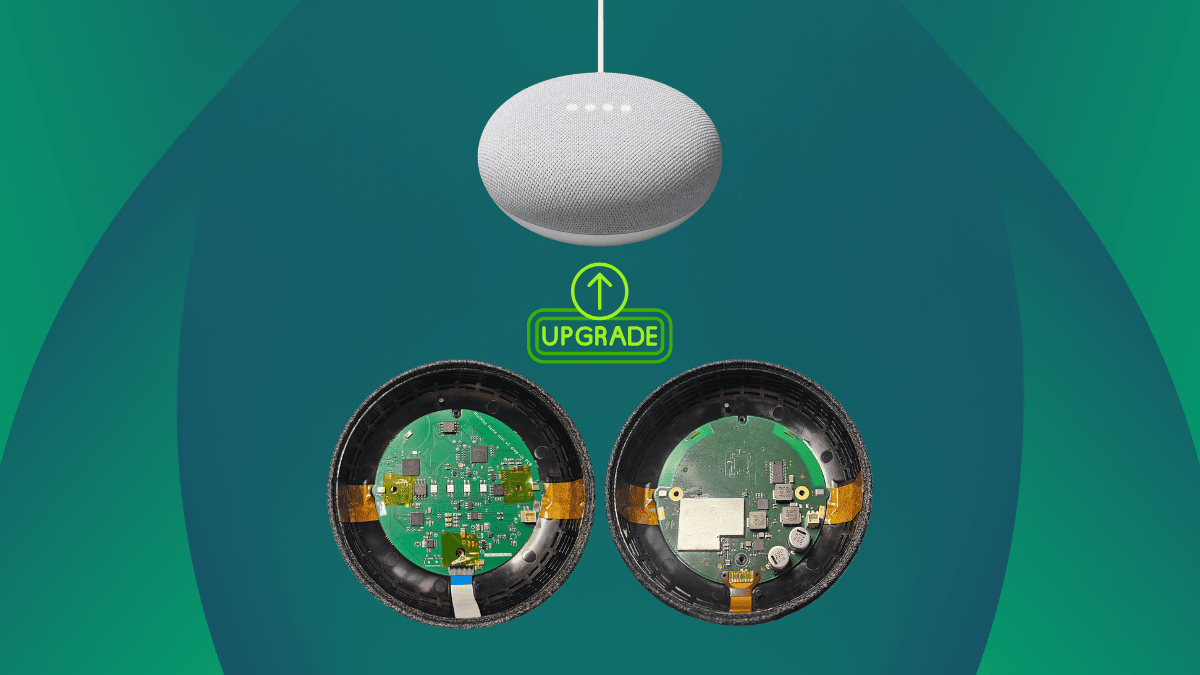
According to Mike Mici, 'This isn't just a repair—it's a massive upgrade. People can now keep their original speaker hardware while gaining local AI capabilities that rival newer devices.'
Background
The Google Home Mini launched in 2017 and sold millions, but it became obsolete as Google discontinued support and shifted to Gemini-powered speakers. The original hardware lacks customization and local processing.
Now, a grassroots movement led by Mici aims to salvage these devices. The board fits inside the original shell and uses the existing speaker, microphone array, and mute button.
Key Specifications
- Main processor: ESP32-S3 (dual-core LX7, 240 MHz) with 8 MB PSRAM and 16 MB flash
- Audio processor: XMOS XU316 (4 MB flash) for noise and echo cancellation
- Microphones: 2× MEMS in original positions
- LEDs: 4× SK6812 RGB for status indicators
- Connectivity: Wi-Fi b/g/n and Bluetooth 5.0 LE
- Software: Preinstalled ESPHome for Home Assistant Assist, Music Assistant, Snapcast; optional cloud LLM
- License: CERN-OHL-S (open hardware)
The board retains the original mute button's physical hardware disconnect for privacy. 'This is crucial for users who want assurance that no voice data leaves the device,' Mici added.

What This Means
For smart home owners, this $85 investment effectively future-proofs a decade-old gadget. The Home Mini now becomes a fully local voice controller for lights, media, and automation—without cloud dependency.
It also paves the way for similar retrofits of other discontinued devices. Tech analyst Sara Lin of SmartHome Today notes, 'This proves that repurposing with modern chips is not only feasible but affordable. Expect more DIY communities to follow suit.'
The board is available now from Mici's store, with shipping details and full assembly guides. For users tired of planned obsolescence, this is a rare win.
Related Articles
- Uniting Your AI Agents: How Collaboration Drives Smarter Decisions
- 6 Essential Insights into AI-Assisted Software Development from the Experts
- OpenAI’s macOS Update Incident: A Deep Dive into the TanStack Supply Chain Breach
- AMD Accelerates Linux Support for Next-Gen AI NPU: AIE4 Enablement Advances in AMDXDNA Driver
- Revolutionizing Facebook Groups Search: Unlocking Community Knowledge Through Hybrid Retrieval
- AWS DevOps Agent and Security Agent Now Generally Available: Autonomous Cloud Operations Reach New Milestone
- Kubernetes v1.36 Ships Volume Group Snapshots to Production: Crash-Consistent Backups Now GA
- FBI Recovers Deleted Signal Messages from iPhone Push Notification Database