Meta Breaks Free from WebRTC Forking Trap, Deploys Dual-Stack Architecture Across 50+ Apps
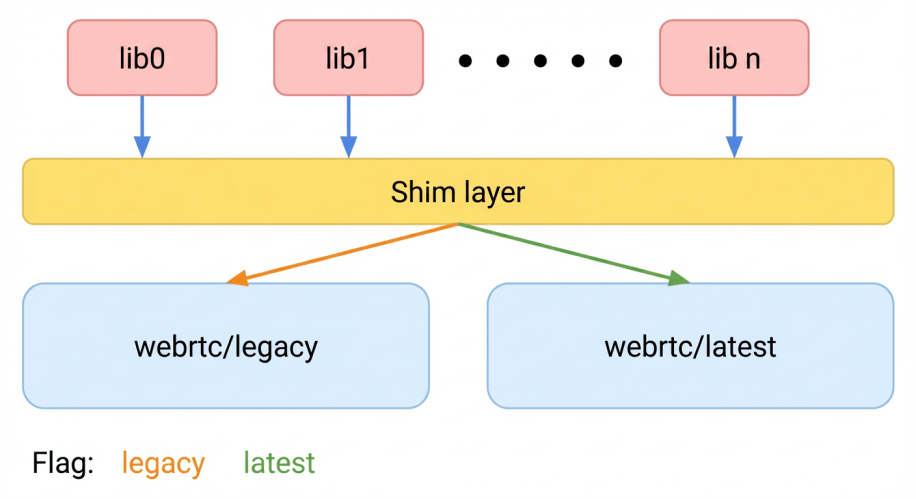
MENLO PARK, CA — Meta has successfully escaped the so-called “forking trap” by modernizing its use of the WebRTC open-source library across more than 50 use cases, including Messenger, Instagram video calls, Cloud Gaming, and VR casting on Quest devices. The company’s engineering team developed a dual-stack architecture that allows two versions of WebRTC to coexist in the same application, enabling safe A/B testing and continuous upstream upgrades without risking service stability for billions of users.
“We realized that forking WebRTC was leading us to a dead end — we were falling behind upstream improvements and spending enormous effort on merges,” said a Meta engineering lead involved in the project. “Our solution was to build a modular system where we inject proprietary components into the latest upstream skeleton, all while maintaining backward compatibility.”
The migration concluded a multi-year effort that moved all major real-time communication services from a divergent internal fork to a continuously updated base. The new approach also resolves the C++ One Definition Rule (ODR) conflict that arises when statically linking two versions of the same library — a problem Meta solved through clever symbol management and build system changes.
Background: The Forking Trap
WebRTC is a critical open-source project for real-time audio and video across platforms. Many companies fork it to add custom features or fix bugs quickly. However, over time, the fork diverges from upstream, making it increasingly difficult to incorporate new security patches, performance improvements, or protocol updates.

Meta faced exactly this challenge. Its internal WebRTC fork, originally created to meet the specific demands of high-scale services, had accumulated proprietary code that made future upgrades prohibitively expensive. The company needed a way to break the cycle without disrupting its massive user base.
What This Means
For Meta, the dual-stack architecture means that every new upstream WebRTC release can be A/B tested against the legacy version before full rollout. This reduces regression risk and ensures that users on diverse devices and networks experience consistent quality.
For the industry, Meta’s approach sets a precedent for managing large-scale open-source dependencies. “Other companies with similar forking issues can learn from our methodology,” said a Meta software engineer. “The modular skeleton approach allows us to stay current while preserving our proprietary optimizations.”
The migration also improved binary size, performance, and security — all while enabling the company to scale real-time communication features for new use cases like cloud gaming and VR.
Technical Details and A/B Testing
To enable safe upgrades, Meta built two in-app A/B test paths: the legacy WebRTC fork and the new upstream-based version. Users are dynamically switched between versions, and performance metrics are compared in real time.
“Our monorepo environment and static linker presented unique challenges,” the engineering lead explained. “We had to violate the ODR to make two copies of the same library coexist — we solved this through careful namespace isolation and build graph restructuring.”
The team also introduced continuous upgrade cycles, where each new WebRTC release is automatically patched and tested against Meta’s custom components before being promoted to production.
Impact and Future Plans
Meta has now applied the dual-stack model to all 50+ use cases, with zero user-facing incidents during the migration. The company plans to extend the architecture to other open-source dependencies that suffer from forking divergence.
“This is not just a one-time fix — it’s a sustainable workflow,” a Meta spokesperson said. “We expect to remain on the cutting edge of WebRTC while maintaining our unique requirements.”
Related Articles
- Python 3.13.9 Released: A Targeted Fix for Developers
- PHP Project Moves to BSD License: A New Era for Open Source Licensing
- 5 Key Insights into Hardware-Assisted Arm Virtual Machines on s390
- How to Secure Your Spot at OpenClaw: After Hours at GitHub HQ
- Navigating Open Source Security in Healthcare: Lessons from the NHS Policy Shift
- A Maintainer's Guide to Thriving in the Age of AI-Driven Open Source
- GitHub Halts Copilot Pro Sign-Ups, Tightens Limits Amid Surging AI Compute Demands
- GitHub's Reliability Journey: Navigating Rapid Growth and System Complexity