The Secret to Supermassive Black Hole Growth: Eccentric Mergers Revealed by Gravitational Waves
Recent observations of merging black holes and neutron stars have revealed surprising orbital shapes that defy traditional physics. These eccentric, oval-like orbits—rather than circular paths—offer new clues about how the universe's most massive black holes form and grow. By studying the ripples in spacetime called gravitational waves, scientists are piecing together a more dynamic picture of cosmic collisions. Below, we explore key questions about these findings and their implications.
1. How do the largest black holes in the universe form?
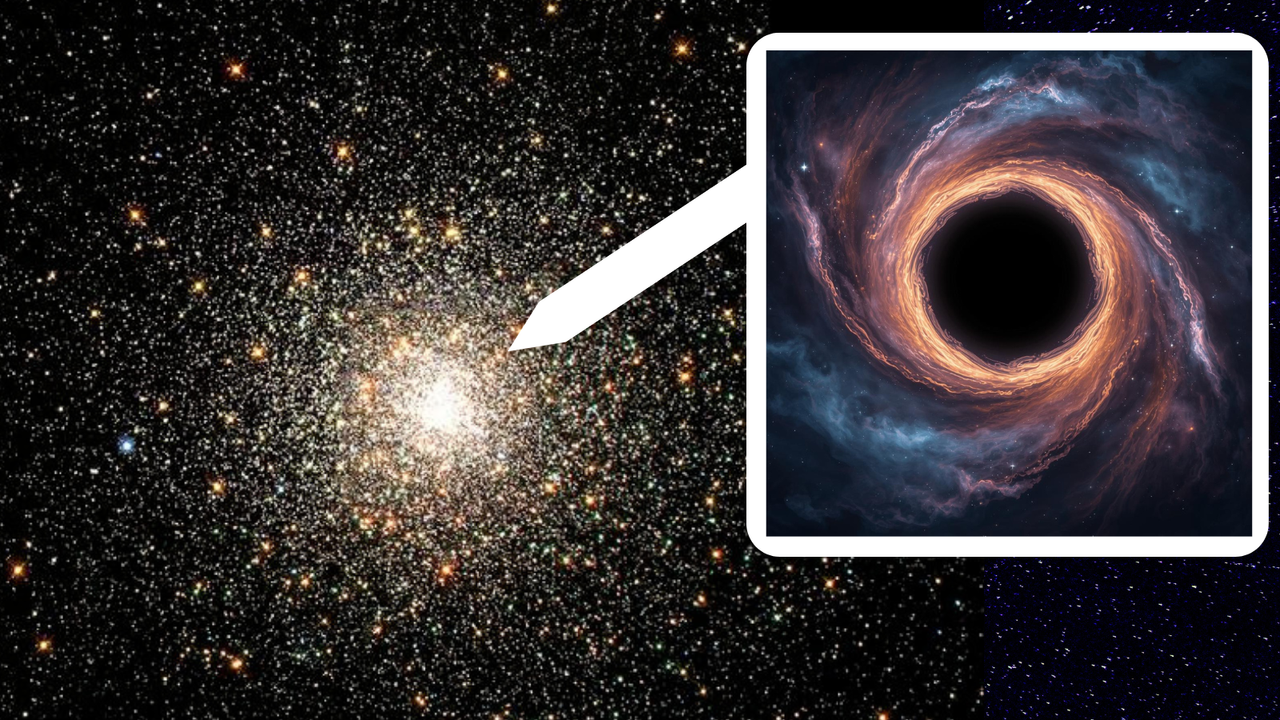
The largest black holes, known as supermassive black holes, are thought to grow through a combination of accretion of gas and mergers with other black holes. When two black holes or neutron stars orbit each other, they slowly spiral inward due to gravitational wave emission. Eventually, they merge into a single, more massive object. Observations now suggest that before these mergers, the binary systems often have highly eccentric (oval) orbits, which may accelerate the merger process. These eccentric orbits provide a direct way to study the formation history of the black holes involved, as they can indicate whether the binary formed in isolation or through dynamical interactions in dense star clusters. Understanding these orbits helps astronomers trace how the biggest black holes accumulated mass over cosmic time.
2. What role do mergers play in black hole growth?
Mergers are a primary mechanism for black hole growth, especially for the most massive ones. When two black holes merge, their masses add together, instantly creating a larger black hole. Repeated mergers can build up black holes from stellar-mass (a few times the Sun's mass) to intermediate-mass (hundreds to thousands of solar masses) and eventually to supermassive (millions to billions of solar masses). The detection of gravitational waves from merging black holes has confirmed that such events occur regularly. However, the orbital shape before merger—circular versus eccentric—affects how quickly the merger happens and the amount of gravitational waves emitted. Eccentric orbits, as seen in some events, suggest that the black holes may have undergone a series of close encounters before finally merging, providing a unique window into their growth path.
3. What are 'unusual oval orbits' and why are they important?
Unusual oval orbits refer to highly eccentric orbits where the two objects (black holes or neutron stars) follow an elongated path rather than a nearly circular one. In a circular orbit, the two bodies always stay the same distance apart; in an eccentric orbit, they swing close together and then far apart. These shapes are important because they challenge the standard assumption that gravitational wave emission quickly circularizes orbits. According to general relativity, orbiting bodies lose energy through gravitational waves, which should make orbits more circular over time. The presence of eccentric orbits before merger indicates that the binary system formed recently or underwent gravitational interactions with a third object, such as a star or another black hole. Studying these orbits reveals the chaotic environments where black holes form and merge, giving clues about the formation of the universe's largest black holes.
4. How do gravitational waves reveal eccentric orbits?
Gravitational waves are ripples in spacetime produced by accelerating masses, such as merging black holes. The exact shape of the gravitational wave signal—its frequency and amplitude over time—encodes the orbital parameters of the merging binaries. For a circular orbit, the signal increases smoothly in frequency and amplitude until the final merger. For an eccentric orbit, the waveform shows modulations: the signal rises and falls in intensity as the objects swing between close approach and separation. By analyzing these modulations, scientists can determine the eccentricity of the orbit. Advanced detectors like LIGO and Virgo have now identified a few events with such characteristic, eccentric signatures. These observations provide direct evidence that some black hole binaries are born with highly elongated orbits, which has major implications for how they formed and evolved.
5. Why do these eccentric orbits challenge current physics?
Eccentric orbits challenge current physics because they contradict the long-held belief that gravitational wave emission rapidly circularizes binary orbits. According to Einstein's general relativity, energy loss from gravitational waves should reduce eccentricity over time, making orbits nearly circular by the time the objects are close enough to emit detectable waves. Therefore, seeing significant eccentricity in the final stages before merger suggests that either the binary formed very recently (so there wasn't enough time for circularization) or that a third body perturbed the system. This latter scenario involves complex gravitational interactions that are not fully understood. Moreover, the existence of such eccentric binaries implies that black hole formation environments—like dense star clusters—are more dynamic and chaotic than previously modeled. These findings push the boundaries of our theoretical models and may require modifications to how we simulate black hole mergers.
6. What do these findings mean for our understanding of black hole formation?
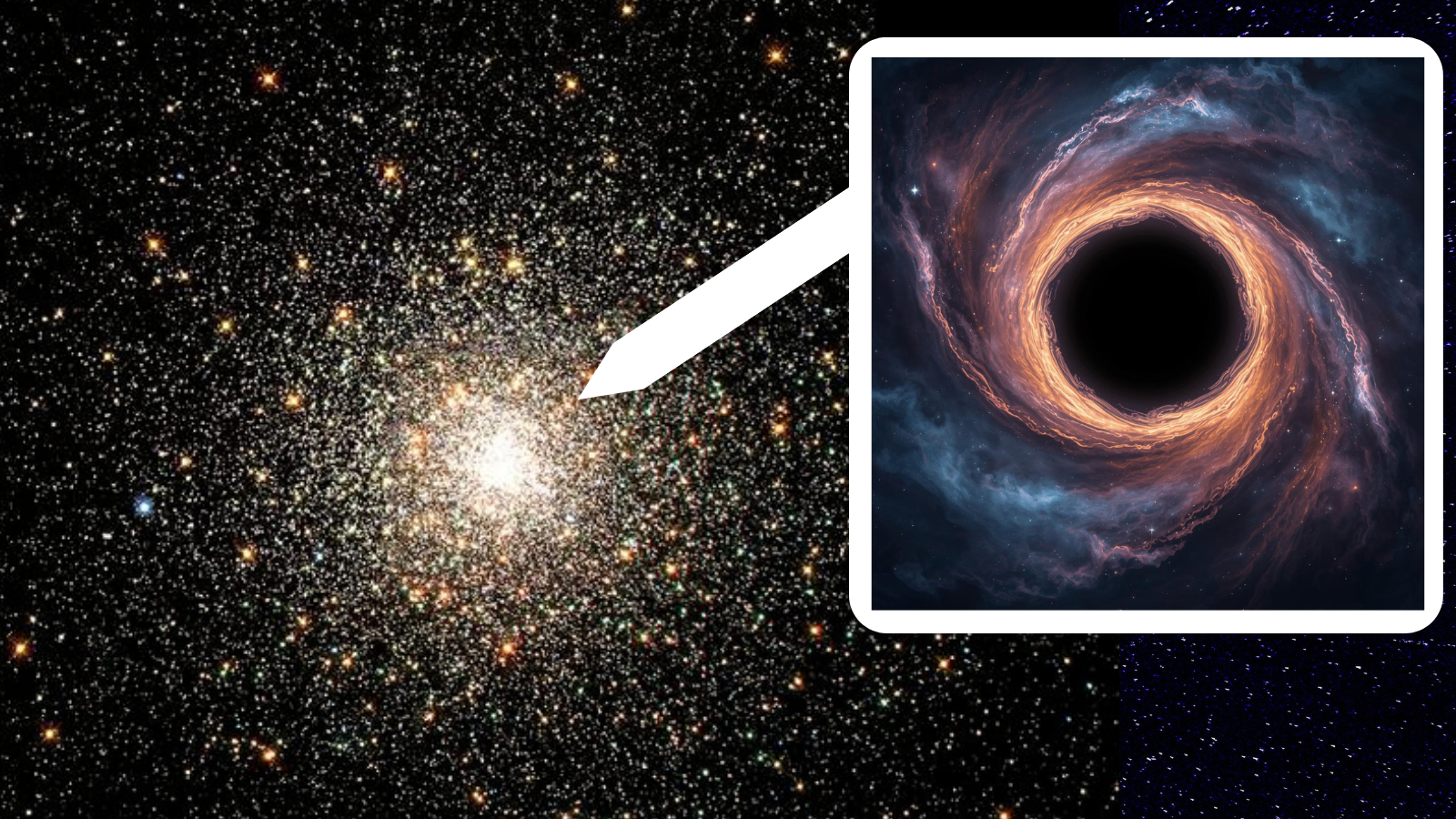
These findings indicate that black hole formation is more diverse and dynamic than simple models suggest. Instead of forming in isolated binary systems with circular orbits from the start, many black holes likely form in dense clusters where gravitational slingshot effects produce eccentric orbits. This supports the idea that supermassive black holes grow through repeated mergers in crowded environments. Additionally, eccentric mergers may be more common than previously thought, meaning we have been missing a key piece of the cosmic puzzle. The ripple effects extend to the biggest black holes: by studying the eccentricity of merger events, astronomers can infer the history of accretion and merging that built these giants. In essence, each eccentric merger is a messenger that tells us about the violent, messy process that creates the largest black holes in the universe.
7. Are there other cosmic events that produce eccentric orbits?
Yes, eccentric orbits are observed in many other cosmic contexts. For example, stars orbiting the supermassive black hole at the center of our Milky Way, Sagittarius A*, follow highly eccentric elliptical paths, revealing the gravitational influence of the black hole. Binary star systems can have eccentric orbits, especially after interactions with a third star. Exoplanets often have eccentric orbits, which challenge theories of planetary formation. In the realm of compact objects (white dwarfs, neutron stars, black holes), eccentric orbits can arise from encounters in dense environments like globular clusters. Gravitational wave observations have now extended this list to include merging black holes and neutron stars. Each such observation helps refine our understanding of gravity and celestial mechanics across different scales, from stellar systems to the most massive black holes in the universe.
8. How do scientists detect such subtle orbital shapes?
Scientists detect subtle orbital shapes primarily through the analysis of gravitational wave signals recorded by detectors like LIGO (Laser Interferometer Gravitational-Wave Observatory) and Virgo. These detectors measure minuscule distortions in spacetime caused by passing gravitational waves. The data is processed using sophisticated algorithms that match the observed waveform against a library of theoretical templates. For eccentric orbits, these templates include modulations that are absent in circular orbit models. By identifying the best-matched template, researchers can extract orbital eccentricity. Additionally, electromagnetic observations (like gamma-ray bursts) from neutron star mergers can provide complementary data. The combination of gravitational wave and electromagnetic signals—multimessenger astronomy—allows for even more precise measurements of orbital dynamics. As detectors improve (e.g., with future space-based LISA), the ability to detect eccentricity at earlier stages will greatly expand, offering deeper insights into the formation of the largest black holes.
Related Articles
- 8 Critical Facts About the SpaceX Rocket Debris Speeding Toward the Moon
- How NASA's Psyche Spacecraft Captured Mars' South Pole During a Critical Flyby: A Step-by-Step Guide to the Mission Milestone
- Unveiling Fast16: A Stealthy State-Sponsored Sabotage Malware
- How to Build a Career Path Like a NASA Center Director: Lessons from Janet Petro's Journey
- Replit CEO Amjad Masad on Cursor's $60B Acquisition Talks, Apple Tensions, and Why Independence Matters
- NASA's Science Mission Drought: Budget Flat, But Fewer Probes—New Chief Warns of 'Mass-Produced Satellite' Gap
- How to Assess Why Physics-Based Weather Models Still Beat AI for Extreme Events
- Hermes Agent Tops OpenRouter: How Nous Research's Self-Learning AI Overtook OpenClaw