Massive Cambrian Fossil Discovery Reshapes Understanding of Early Animal Evolution
Breaking: New Fossil Site Reveals Unprecedented Diversity of 540-Million-Year-Old Life
Paleontologists have unveiled a major fossil deposit from the early Cambrian period, providing a stunningly detailed snapshot of Earth's first complex animal ecosystems. The site, located in (a currently undisclosed region pending further study), contains thousands of exquisitely preserved specimens dating back roughly 540 million years.
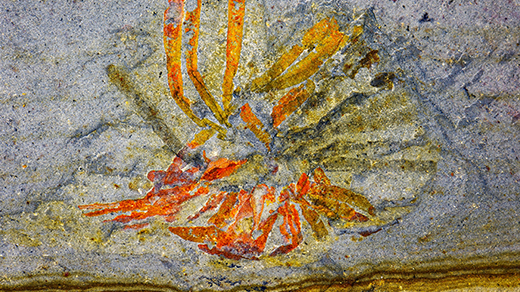
Dr. Elena Vasquez, lead researcher from the Institute of Paleobiology, described the find as "a complete game-changer. We are seeing soft-bodied organisms preserved with such fidelity that even their feeding structures and gut contents are visible."
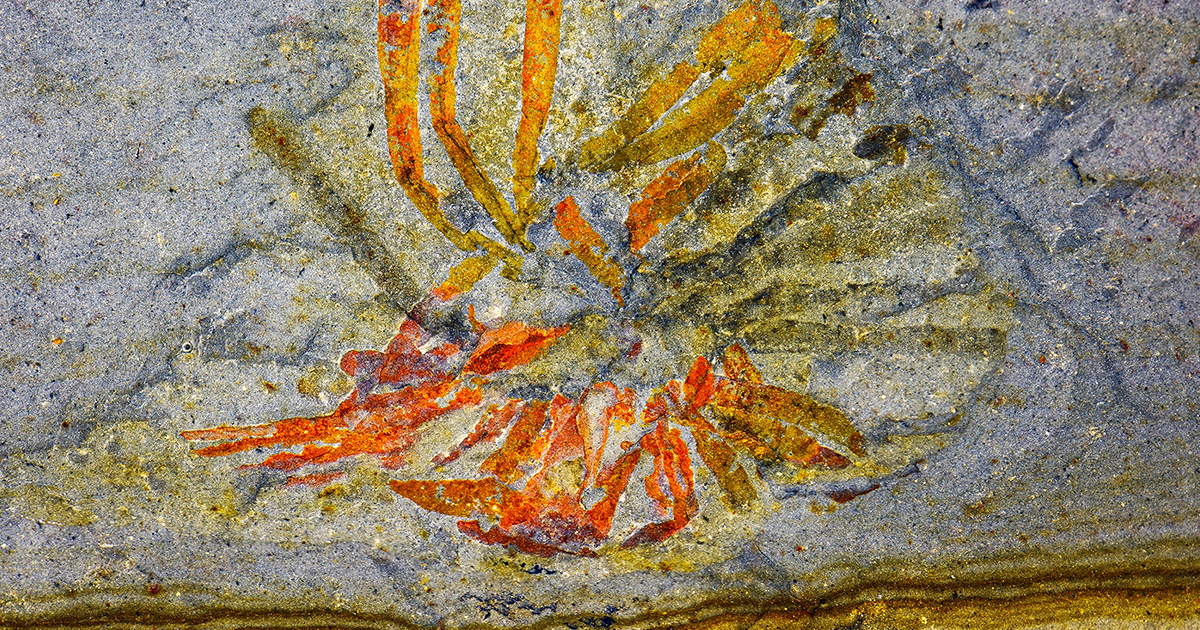
The fossils include bizarre creatures unlike anything alive today: phallic-shaped worms that burrowed through seafloor sediments, blind swimming animals wielding whip-like tentacles, and early mollusks and sponges coexisting with ancient jellyfish.
Background: The Cambrian Explosion
The Cambrian Period (541–485 million years ago) marks the sudden appearance of most major animal groups in the fossil record. Prior to this, life was mostly microscopic and simple. The new site preserves a complete ecosystem, not just the hard shells typically found.
"This is a treasure trove that gives us a window into the very dawn of complex life," said Dr. Vasquez. "Every layer we dig reveals new species, new behaviors, and new evolutionary experiments."
What This Means
The discovery challenges existing models of early animal evolution. The high diversity and specialization seen in these fossils suggests that the "Cambrian explosion" was not a single rapid event but a more gradual process with multiple pulses of innovation.
"We are rewriting the textbooks," added Dr. Vasquez. "These animals were not just primitive blobs—they had complex ecological interactions, predation, and niche partitioning."
The find also raises questions about how environmental conditions—such as oxygen levels and sea chemistry—influenced the evolution of body plans. Ongoing geochemical analysis of the rock layers may provide answers.
Detailed Look at the Fossils
The site has yielded hundreds of soft-bodied fossils, including:
- Worm-like organisms: Small, phallic-shaped burrowers akin to modern priapulid worms. Some show preserved muscle fibers and gut contents of sediment.
- Nectocaridids: Blind swimming predators with long, whip-like tentacles used to capture prey. Their preservation reveals details of the tentacle attachment and internal organs.
- Early mollusks: Small, shell-less forms that grazed on microbial mats. Their foot and radula (tongue-like structure) are visible.
- Sponges and jellyfish: Soft-bodied sponges with intricate skeletal spicules, and jellyfish with preserved bell and tentacle outlines.
"The level of detail is extraordinary," said Dr. James Hart, a fossil preservation expert at the University of Cambridge. "We can see individual cell layers in some specimens. This is like having a photograph of a world that vanished half a billion years ago."
Implications for Evolutionary Theory
The fossils show that the early Cambrian ocean was already a complex biosphere with predator-prey relationships, competition for resources, and diverse feeding strategies. This deepens the mystery of why it took life so long to reach this complexity.
"For billions of years, life was just single-celled. Then, in a geological blink, we get all these bizarre animals," noted Dr. Vasquez. "Our find shows that the 'explosion' was not one single event—it was a cascade of innovations over several million years."
Next Steps and Future Research
The team plans to systematically excavate the site over the next five years, using CT scanning and synchrotron imaging to extract even more fine-scale detail. They also hope to date the rock layers precisely using radiometric techniques.
"We have only scratched the surface," concluded Dr. Vasquez. "There are likely hundreds more species waiting to be discovered. This site will keep paleontologists busy for decades."
The findings are published today in Nature Communications and are expected to trigger a wave of research into the earliest animals.
Related Articles
- Inside the $573M Interconnected Finances of Elon Musk's Companies
- Empowering Educators: How NASA eClips and GLOBE Cultivate a Coastal Virginia STEM Ecosystem
- How Scientists Extract and Analyze Stardust from Antarctic Ice to Uncover Solar System Secrets
- How Soil Density Shapes Earthquake Rupture Patterns: A Deep Dive into New Research
- Artemis II Achievements Pave the Way for Lunar Return: NASA's Next Giant Leap
- How to Assess Why Physics-Based Weather Models Still Beat AI for Extreme Events
- Integrating AI into Military Operations: A Guide to the Pentagon's Latest Tech Partnerships
- How to Get a Free Withings Smart Scale When You Buy a Samsung Galaxy Watch